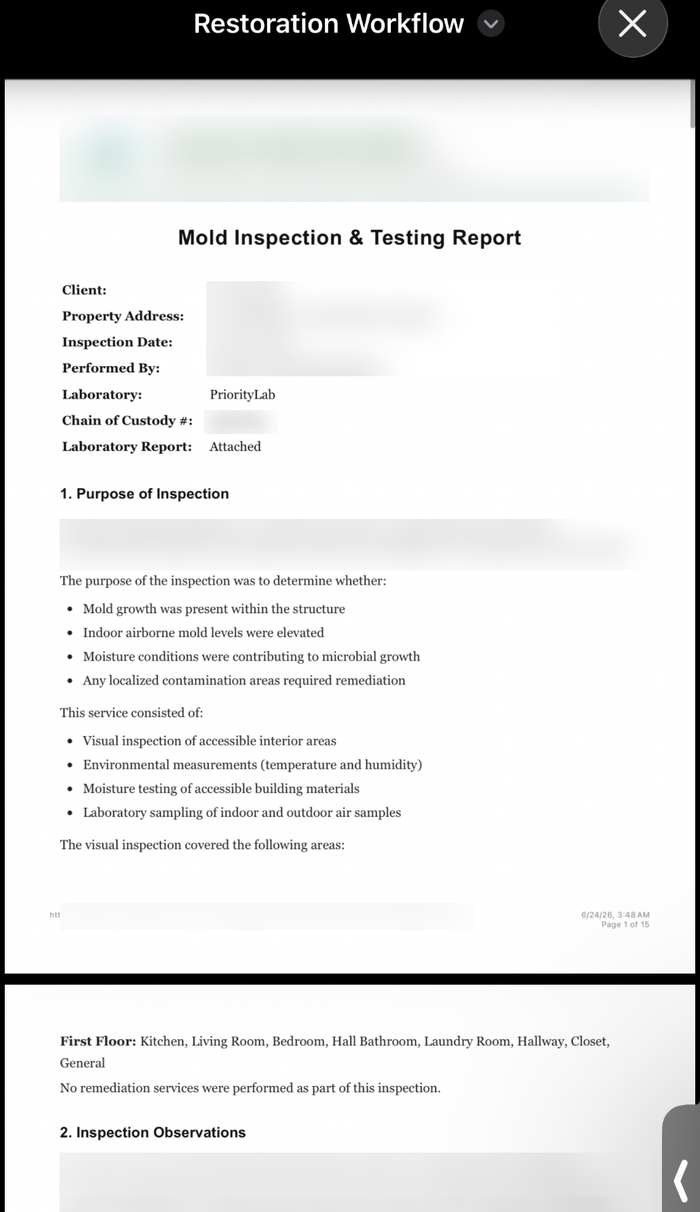
Synthetic example — no customer data
Every property, person, observation and reading below is invented for illustration. This is not a completed RW customer report, a compliance template or evidence of laboratory testing. No booking is required.
Open printable example1. Purpose and scope
Synthetic training example — not a real property inspection. The client requested an assessment of a musty odor near a kitchen sink. The inspection covers accessible kitchen and hallway surfaces only. No destructive testing, hidden cavities, medical assessment or remediation was included.
2. Property and visit record
Example Property A; visit date October 26, 2026. Inspector: Example Inspector (fictitious, no certification implied). The occupant described an earlier supply-line leak. That account is recorded as reported history, not an independently verified cause.
3. Observations and photo references
Figure 1: synthetic description of staining on the cabinet base below the sink. Figure 2: synthetic description of the adjacent hallway, where no visible growth was noted on accessible surfaces. Describe what was seen and where; do not turn a photograph alone into a species identification or a finding about concealed materials.
4. Environmental and material readings
Illustrative kitchen air: 75°F and 55% RH. Hallway air: 73°F and 50% RH. Example wood readings: 18% at the cabinet base and 10% at an unaffected reference of comparable material, using the same pin meter and mode. These invented numbers demonstrate documentation structure, not dry goals or a conclusion about a real building. Record the instrument, material setting, exact point and time.
5. Sampling and original laboratory documents
Illustrative sample labels: Example Indoor A and Example Outdoor Control. A real report records location, sample type, collection date/time, sampling method, volume where relevant and custody details, then attaches the unaltered laboratory report. No laboratory was engaged and no analytical results were produced for this example. Do not invent spore counts, determinations or signatures to fill a template.
6. Interpretation and recommendations
In this example, the leak history, staining and elevated reading at the cabinet justify further investigation of the moisture source and accessible affected materials by a qualified professional. Laboratory interpretation, if sampling is performed, must consider the inspection context and sampling limitations. This example makes no clearance determination, health conclusion or assurance that the property is free of mold.
7. Limitations and review
Explain accessible areas, inaccessible assemblies, conditions at the time of the visit and the limits of any sampling. A single visit is not a prediction of future conditions. Identify who prepared and reviewed the real report and retain supporting records. Use applicable professional procedures and current standards; this resource is not a substitute for them.
How the RW reporting workflow relates
The existing reporting workflow assembles inspection findings, readings, selected photos and lab documentation into an editable draft. AI assists; the restoration professional reviews and approves before sending. A report does not replace professional judgment or turn observations into a clearance certification.